
Goodbye and Thank You from the Dioscuri Centre
It is with a heavy heart that I announce the closing of our Dioscuri Centre. Although we were offered a funding extension (thank you MPG and NCN), after careful reflection I have decided not to accept it, mainly for personal reasons. This decision was not made lightly. Over the years, the Centre has been a…

A fruitful visit of our guest!
We were pleased to welcome Prof. Ute Neugebauer to the IChF PAN as a guest of the Dioscuri Centre for Physics and Chemistry of Bacteria! During her visit, Prof. Neugebauer delivered an impressive presentation on her research in the application of Raman spectroscopy for clinical diagnostics. Her work focuses on detecting bacterial infections and understanding…

🌟 Celebrating Achievement! 🌟
We are pleased to share that the poster presented by our colleague, Karolina Drabik, at the recent Microsymposium of the IChF PAN received special recognition from the International Advisory Board! 🎉 This distinction reflects the high quality of research being carried out in our group and highlights the innovative approach to understanding complex biological systems.…
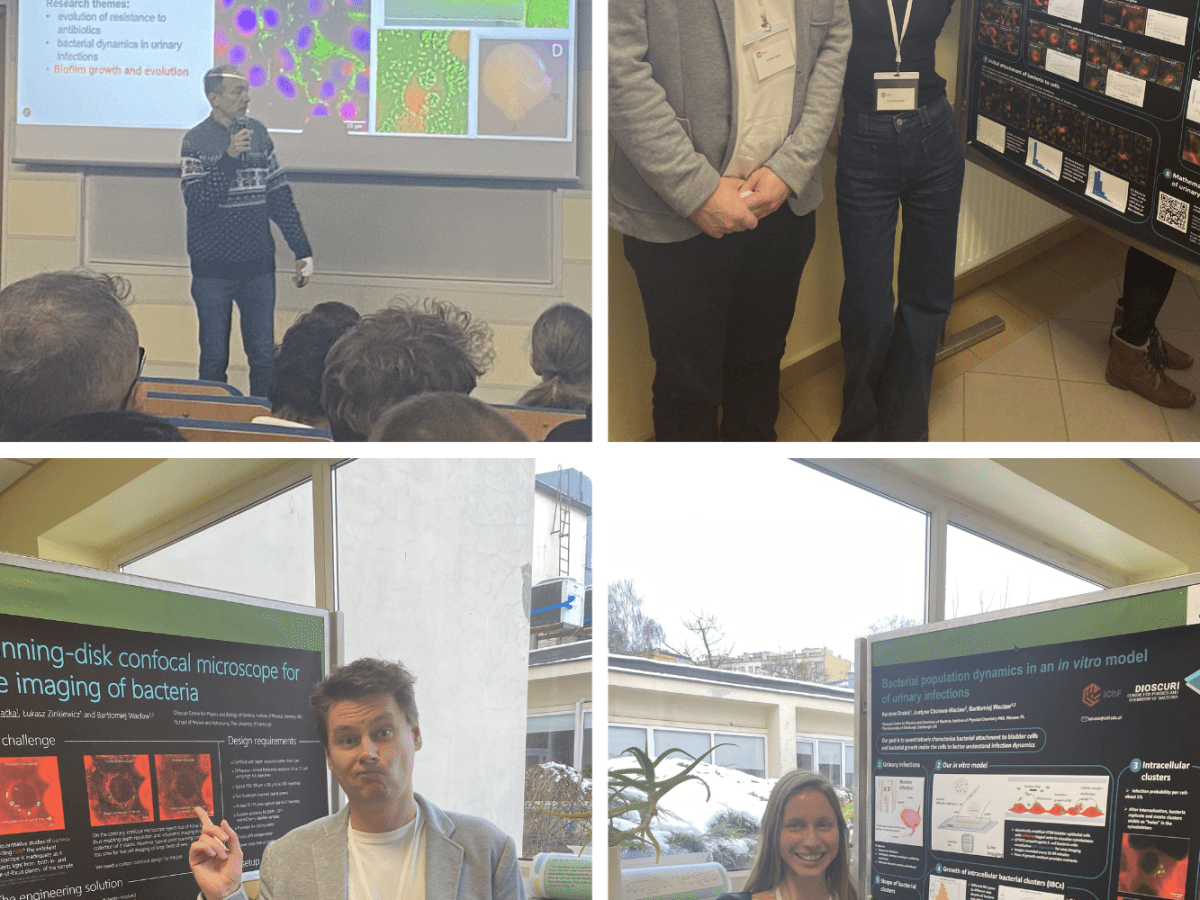
Dioscuri Centre’s Contributions to the IChF Micro-symposium
Our team actively participated in this year’s micro-symposium organized by the Institute of Physical Chemistry PAS. The event provided an excellent platform to showcase our latest achievements and research. Our leader Bartlomiej Waclaw delivered an inspiring presentation highlighting Dioscuri research accomplishments in 2024. His talk garnered significant interest and sparked a lively scientific discussion. In…
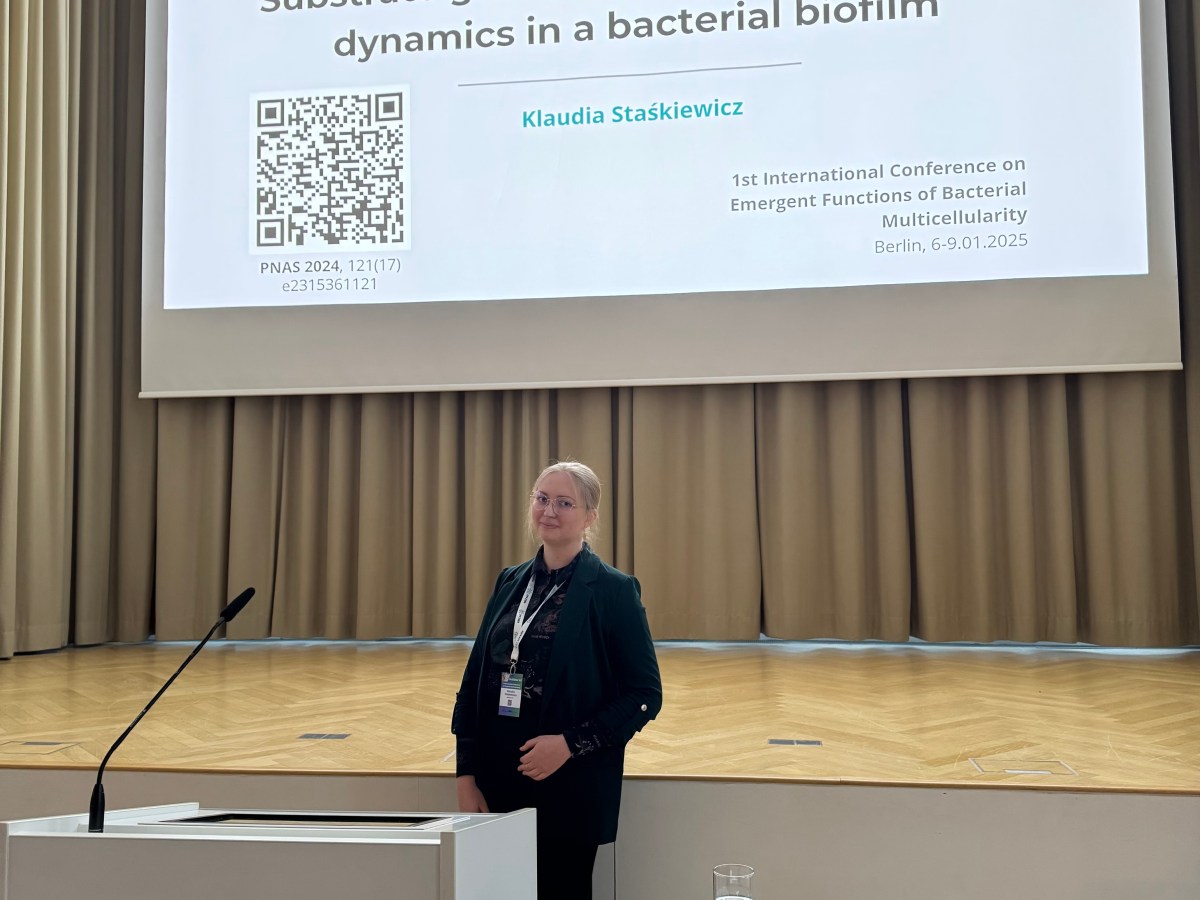
Congrats Klaudia! We are happy to have you on the team!
This week, one of our teammates, Klaudia Staśkiewicz, had an opportunity to present her contribution to Dioscuri Centre research at the 1st International Conference on Emergent Functions of Bacterial Multicellularity organized in Berlin as a part of interdisciplinary Priority Program #SPP2389 funded by Deutsche Forschungsgesellschaft (DFG). She presented the results on the topic of population dynamics…

We are happy to introduce new scientist to our team! 🎉
Marek, a quantitative biologist, joined us in December through a NAWA – Narodowa Agencja Wymiany Akademickiej Polskie Powroty grant. His research combines mathematical modeling with experimental approaches to unravel the complex dynamics of biological systems, with a particular focus on how cells respond to pathogenic challenges. At our Centre, he will explore host cell-bacteria interactions…

Scientific Advisory Board Meeting
🌟 What an intense but fantastic few days we’ve had! On the 9th and 10th of December, we enjoyed a packed schedule filled with presentations, discussions, and the opportunity to have one-on-one conversations with members of the Scientific Advisory Board.Our interactions went beyond science—we also had a great time socially, sharing meals at a restaurant,…
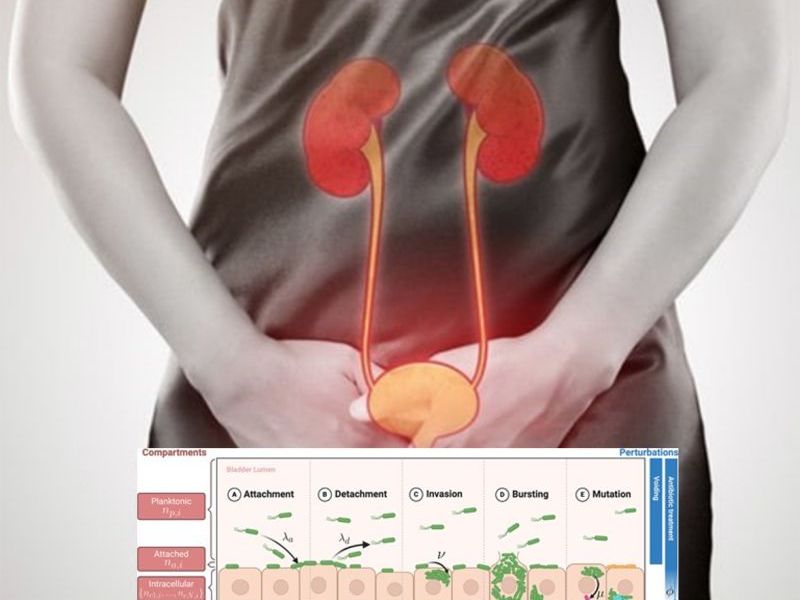
🌍 Our contribution to the field of urinary tract infections -New Publication!
Our colleagues (Karolina Drabik, Bartlomiej Waclaw), in collaboration with Dioscuri German partner-the group led by Arne Traulsen from Max Planck Institute for Evolutionary Biology , have published a significant study on the ecological and evolutionary dynamics of urinary tract infections (UTIs). This work, leveraging a mathematical model, delves into the complex interactions between different bacterial…
Practice presentation session
Yesterday, our research team had a productive practice presentation session, joined by our colleagues from the Dioscuri Centre for RNA-Protein Interactions in Human Health and Disease lead by Gracjan Michlewski. It was an insightful day filled with constructive feedback, stimulating discussions, and great camaraderie. The session allowed our researchers to sharpen their presentation skills and…
Our Polish-German meeting in Szczecin
Last week our Warsaw-based Dioscuri Centre travelled to Szczecin for a lab retreat and a meeting with our collaborators from Germany (Prof. Arne Traulsen, MPI Evolutionary Biology, Ploen). It was two intense days of research talks, discussions, and socializing. Despite our groups using very different approaches (theory in Ploen, mainly experiments in Warsaw), we were…
Follow the news
Get new content delivered directly to your inbox.
 Dioscuri Centre for Physics and Chemistry of Bacteria